Baby Magpie: A Complete Guide to Young Magpies
A baby magpie is one of the most fascinating young birds in the corvid family, a group that also includes crows, ravens, and jays. Known for their intelligence and adaptability, magpies raise their young with remarkable care and protection.
Many people become concerned when they spot a baby magpie on the ground, assuming it has been abandoned. In reality, young magpies often spend time outside the nest while their parents continue feeding and guarding them. Understanding the different stages of a baby magpie’s growth can help bird enthusiasts and homeowners recognize normal behavior and respond appropriately when they encounter one.
This guide covers how to identify a baby magpie, what it eats, how it develops, and what you should do if you find one.
What Is a Baby Magpie?
A baby magpie is the young offspring of a magpie species, most commonly the Eurasian magpie (Pica pica) or the black-billed magpie (Pica hudsonia). These birds belong to the corvid family, which is widely recognized for high intelligence and complex social behavior.
Young magpies pass through several developmental stages before becoming fully independent. During these stages, their appearance and behavior change significantly.
Hatchling Stage
Newly hatched magpies are tiny, helpless, and mostly featherless. They depend entirely on their parents for warmth, protection, and food.
At this stage, the chicks remain in the nest continuously and cannot regulate their body temperature effectively. Parents make frequent feeding trips throughout the day to support rapid growth.
Nestling Stage
As the chicks grow, feathers begin to emerge, and their eyes open. Nestlings become more active and vocal, often calling loudly when parents return with food.
This growth period is extremely important because young magpies develop much of their body size and strength before leaving the nest.
What Does a Baby Magpie Look Like?
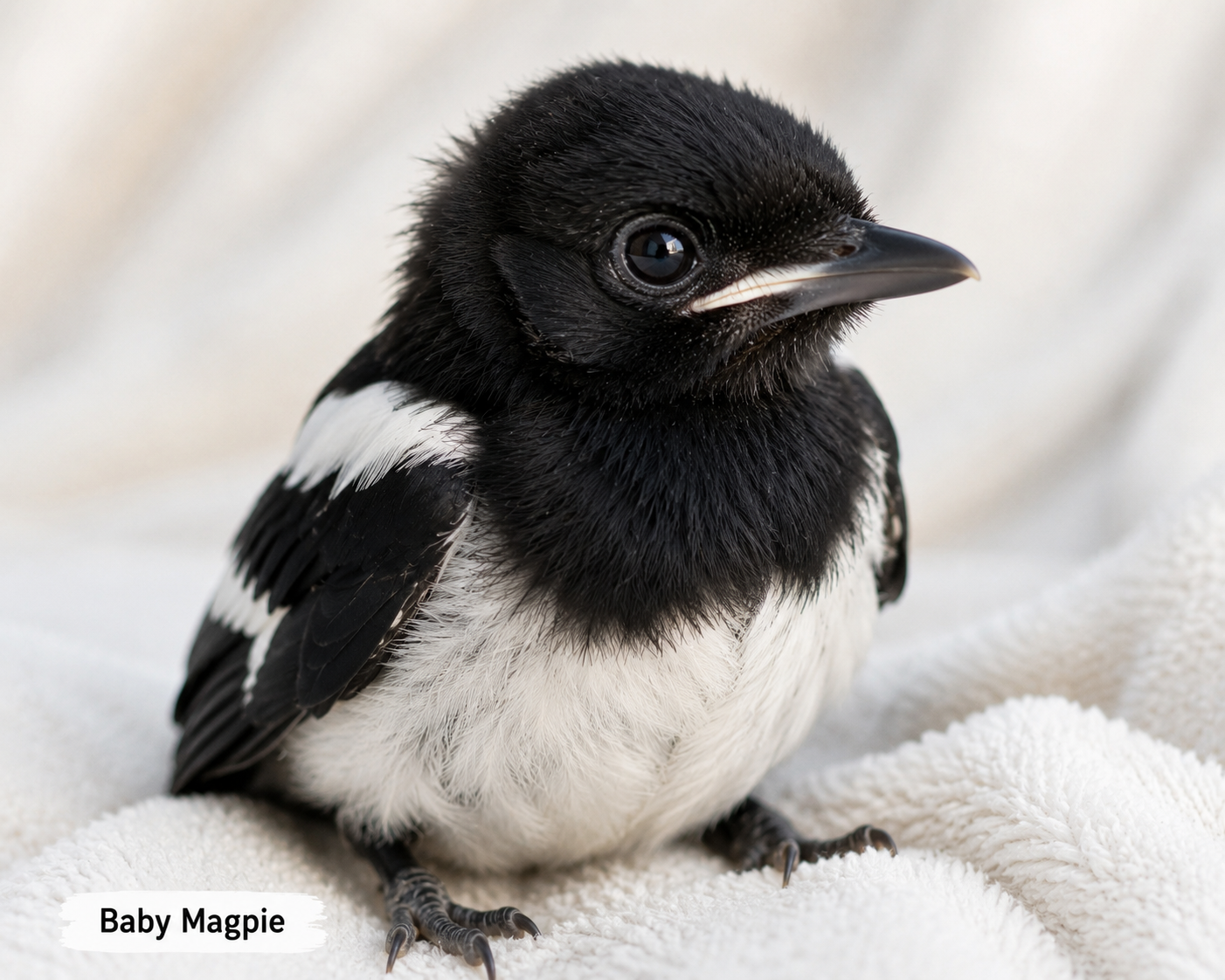
Baby magpies look very different from adults. Their appearance changes noticeably as they mature.
Physical Characteristics
Young magpies typically have:
- Shorter tails than adult birds
- Duller black-and-white plumage
- Softer, fluffier feathers
- Less pronounced iridescent coloring
- Larger-looking heads relative to body size
Juvenile magpies often lack the glossy sheen seen in mature birds and can appear somewhat scruffy during their early development.
How to Identify a Fledgling
A fledgling is a young bird that has recently left the nest but is still dependent on its parents.
Fledgling magpies usually:
- Have most of their feathers
- Can hop and flutter short distances
- Have noticeably short tails
- Frequently call for food
- Stay close to nearby shrubs or trees
Many people mistakenly believe fledglings need rescuing, when in fact this stage is a normal part of development.
Where Do Baby Magpies Live?
Baby magpies spend their earliest weeks in carefully constructed nests.
Magpie Nests
Magpies build large nests made from twigs, sticks, and mud. Many nests feature a dome-shaped roof and a side entrance, providing protection from predators and weather.
These nests are often located in:
- Tall trees
- Dense bushes
- Hedgerows
- Urban parklands
- Rural woodlands
The structure of a magpie nest reflects the species’ reputation for intelligence and problem-solving ability.
Life After Leaving the Nest
Baby magpies typically leave the nest around 24 to 30 days after hatching. Even after fledging, they remain under parental care for several weeks and often stay within the family territory for months.
Parents continue feeding and protecting them while they learn essential survival skills.
What Do Baby Magpies Eat?
Young magpies require a protein-rich diet to support rapid growth.
Diet in the Nest
Parent magpies bring a variety of foods to their chicks, including:
- Insects
- Beetles
- Caterpillars
- Worms
- Small invertebrates
- Other natural food sources
These foods provide the nutrients necessary for feather development and healthy growth.
Learning to Find Food
As fledglings mature, they begin exploring their surroundings and practicing foraging behavior. However, parents continue supplying much of their food until the young birds become more independent.
This gradual transition allows baby magpies to develop hunting and scavenging skills while still benefiting from parental support.
How Long Do Baby Magpies Stay With Their Parents?
Unlike some bird species that become independent quickly, magpies maintain strong family bonds.
Extended Family Care
After fledging, young magpies often stay close to their parents for one to two months. During this period, adults continue feeding them and teaching important survival behaviors.
The family group may remain together even longer, depending on environmental conditions and food availability.
Social Learning
Magpies are highly social birds. Young birds learn:
- Foraging techniques
- Predator awareness
- Territory recognition
- Communication signals
This extended learning period contributes to the species’ remarkable intelligence and adaptability.
What Should You Do If You Find a Baby Magpie?
Finding a young bird can be concerning, but the best action depends on its age and condition.
If It Is a Fledgling
A fully feathered fledgling on the ground is often behaving normally. In many cases, parents are nearby and continue caring for it. Wildlife experts generally recommend observing from a distance unless the bird is clearly injured or in immediate danger.
If necessary, you can gently move the bird to a safer nearby location, such as a bush or low branch.
If It Is a Nestling
A nestling with few feathers or exposed skin usually belongs in a nest. If the nest can be located safely, returning the chick may give it the best chance of survival. When the nest cannot be found or the bird is injured, contacting a licensed wildlife rehabilitator is often the recommended course of action.
Avoid attempting to raise wild birds without professional guidance.
Common Challenges Baby Magpies Face
The period immediately after leaving the nest is often the most dangerous stage of a magpie’s life.
Predators
Young magpies are vulnerable to:
- Birds of prey
- Crows
- Cats
- Other predators
Because fledglings are still developing flight skills, they are easier targets than adults.
Human-Related Risks
Urban environments introduce additional dangers, including:
- Traffic
- Domestic pets
- Window collisions
- Habitat loss
Parents work hard to protect their offspring, but not all fledglings survive their first year.
Frequently Asked Questions
Q: How can you tell if a baby magpie is abandoned?
A: A young magpie sitting alone does not necessarily mean it has been abandoned. Parents often leave temporarily while searching for food. Observe from a distance for a period before intervening, especially if the bird is fully feathered.
Q: How long does it take for a baby magpie to fly?
A: Most baby magpies leave the nest approximately 24 to 30 days after hatching. Even after fledging, they continue improving their flying skills over several weeks.
Q: Can baby magpies survive on their own?
A: Newly fledged magpies are not fully independent. They rely on their parents for food, protection, and guidance until they develop the skills needed to survive independently.
Q: What color is a baby magpie?
A: Baby magpies generally have duller black-and-white feathers than adults. Their tails are shorter, and they lack the strong iridescent shine commonly seen in mature birds.
Q: Is it safe to feed a baby magpie?
A: Feeding wild baby birds is generally not recommended unless directed by a licensed wildlife rehabilitator. Improper foods can cause developmental and health problems.
Conclusion
A baby magpie undergoes an impressive transformation from a helpless hatchling to a confident young bird capable of navigating the world on its own. Throughout this process, parental care plays a vital role, with adult magpies providing food, protection, and valuable lessons that help their offspring survive.
Understanding the difference between a nestling and a fledgling is especially important for anyone who encounters a young magpie outdoors. In many cases, the best help is simply allowing nature to take its course while ensuring the bird remains safe from immediate threats. By learning more about these intelligent birds, we can better appreciate the remarkable journey of a baby magpie from nest to independence.

[…] Piddle Patch is a real-grass dog toilet system designed to give dogs a natural place to relieve themselves when outdoor access is limited. Unlike traditional puppy pads or artificial turf, it uses fresh, soil-free grass grown in a liquid-retentive mat and delivered ready for use. The product is particularly popular among apartment dwellers, puppy owners, and people looking for a more natural alternative to disposable pee pads. […]