
The phrase “half term 2019” was one of the most searched school-related topics by UK parents, teachers, and students planning holidays, childcare, and family schedules throughout the year. In the United Kingdom, half-term breaks divide each school term into manageable sections, giving pupils and staff a short break between longer academic periods.
Half Term 2019 Although school calendars varied slightly between councils and academy trusts, most schools in England and Wales followed a similar structure in 2019. February half term, May half term, and October half term were the key breaks families planned around. Understanding those dates was especially important for booking travel, arranging childcare, and avoiding peak holiday costs.
Half Term 2019 This guide explains the most common UK half-term dates in 2019, how school holiday systems worked, and why half-term breaks remain such an important part of British education culture.
What Was Half Term in the UK?
Half term is a short school holiday that takes place midway through an academic term. Most UK schools operate on a three-term academic year consisting of autumn, spring, and summer terms. Each term is usually divided by a one-week break known as half term.
In 2019, most schools in England scheduled three main half-term breaks:
- February half term
- May half term
- October half term
Half Term 2019 While many councils followed similar patterns, exact dates depended on local authorities and individual schools. Academies and independent schools sometimes set their own calendars independently from council guidance.
Why Half-Term Breaks Matter
Half-term holidays are more than simple school closures. For many families, they provide an opportunity to rest, travel, visit relatives, or spend time together without the longer disruption of summer holidays.
Half Term 2019 Teachers also rely on these breaks to recover from demanding teaching schedules. Discussions around school wellbeing became more common during and after 2019, with some schools later experimenting with longer two-week October half terms to reduce burnout.
How UK School Calendars Worked in 2019
Half Term 2019 Most state schools in England were required to provide 190 teaching days during the academic year. Local councils usually published recommended term dates, but schools could still choose different INSET days for staff training.
Because of this flexibility, parents often had to confirm dates directly with their child’s school before making travel arrangements.
February Half Term 2019
Half Term 2019 The February half term was typically the first major school break after the Christmas holidays. In most English councils, it fell between Monday 18 February and Friday 22 February 2019.
Why February Half Term Was Popular
Half Term 2019 Families often used the February break for short UK holidays or European ski trips. Since the weather was still cold across Britain, indoor attractions, museums, and winter resorts became especially busy during this period.
Half Term 2019 Travel prices also tended to increase significantly because schools across many regions closed simultaneously. Parents who booked early often found better deals on flights and accommodation.
Variations Between Councils
Half Term 2019 Not every council followed identical dates. Leicester, for example, scheduled some breaks differently from nearby authorities in 2019. A few areas also shortened the holiday or placed it a week later.
That variation created challenges for families with children attending schools in different boroughs or counties.
Easter and Spring Breaks in 2019
Half Term 2019 Although Easter holidays are technically separate from half term, they formed another major break in the school calendar. Most schools closed for roughly two weeks during April 2019.
Common Easter holiday dates ranged between early and late April, depending on the council.
Bank Holidays During Easter
Half Term 2019 Several UK bank holidays aligned with Easter in 2019, including:
- Good Friday — 19 April 2019
- Easter Monday — 22 April 2019
These public holidays influenced school scheduling and increased domestic travel demand across the UK.
Spring Holiday Travel Trends
Spring breaks were especially popular for family holidays abroad. Warmer destinations such as Spain, Portugal, and the Canary Islands saw increased bookings from UK travellers during Easter 2019.
At the same time, local attractions across Britain prepared for larger visitor numbers as families looked for affordable staycation options.
May Half Term 2019
The May half term marked the final major break before the long summer holiday. In most areas, schools closed from Monday 27 May to Friday 31 May 2019.
Why May Half Term Was Important
For students preparing for GCSEs and A-levels, May half term often arrived during exam season. Many teenagers spent part of the break revising, attending study sessions, or preparing for final assessments.
For younger children, however, it was viewed as an early taste of summer. Parks, beaches, and outdoor attractions became increasingly busy as weather conditions improved.
Connection With Spring Bank Holiday
The Spring Bank Holiday in 2019 fell on Monday 27 May, overlapping with the beginning of half term in many regions.
That overlap made the week particularly busy for UK tourism businesses, transport networks, and family entertainment venues.
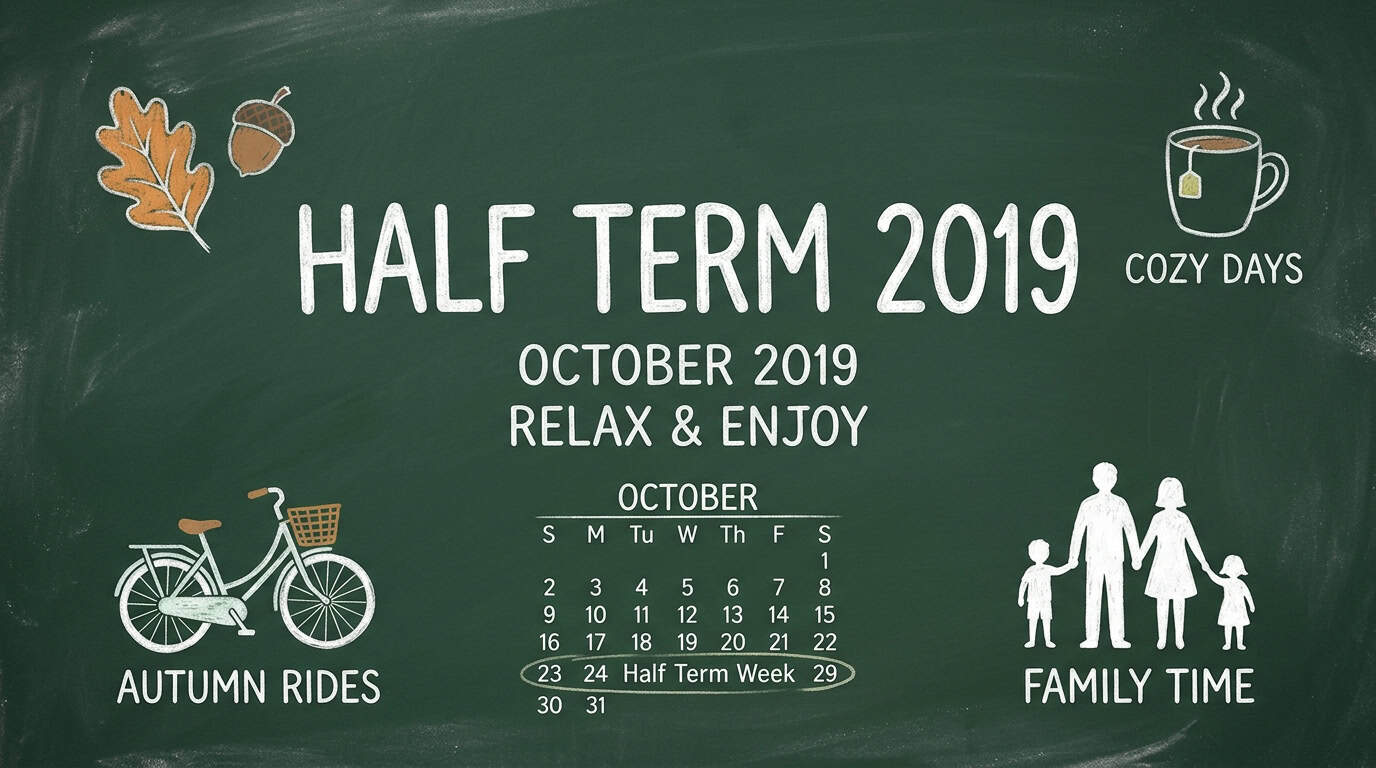
October Half Term 2019
October half term was one of the most anticipated breaks of the school year because it interrupted the long autumn term. Most schools closed between Monday 21 October and Friday 25 October 2019, though some regions used the following week instead.
The Long Autumn Term Challenge
Teachers and students often describe the autumn term as the most exhausting stretch of the academic year. Schools reopen in September and continue for several weeks before the October break arrives.
Because of this, many parents saw October half term as a much-needed opportunity to recharge before winter.
Growing Debate About Longer Half Terms
By the late 2010s, some councils and academy trusts had started discussing two-week October half terms. Nottinghamshire became one of the early examples of authorities adopting longer autumn breaks.
Supporters argued that longer breaks improved wellbeing and reduced illness-related absences. Critics, however, pointed to higher childcare costs and difficulties for working parents.
How Families Planned Around Half Term in 2019
Half-term planning became a major annual routine for millions of UK households. Parents often coordinated annual leave from work months in advance to match school closures.
Popular Half-Term Activities
Families commonly spent half term:
- Taking short UK holidays
- Visiting relatives
- Booking international travel
- Attending holiday clubs
- Exploring museums and attractions
- Participating in sports camps
Demand for family-friendly activities increased sharply during school breaks, especially in tourist-heavy regions.
Childcare Challenges
For working parents, half term could create logistical and financial pressure. Holiday clubs and childcare providers frequently filled up quickly, particularly during February and October breaks.
This issue became part of wider discussions about whether school holiday structures truly matched modern working patterns in the UK.
Why Half Term Remains Important Today
The 2019 school calendar reflected traditions that still shape British education today. Even though some councils and academies now experiment with different schedules, the concept of half term remains deeply embedded in UK school life.
Students benefit from regular breaks during long academic periods, while families continue to organize holidays and routines around these dates.
The debates that began around 2019 about longer autumn breaks, teacher wellbeing, and childcare costs also continue to influence education policy discussions across England.
Frequently Asked Questions
Q: When was February half term in 2019?
A: In most UK schools, February half term took place from Monday 18 February to Friday 22 February 2019. However, some councils used slightly different dates depending on local schedules.
Q: How long was half term in 2019?
A: Most half-term breaks lasted one week. Some schools also added weekends before and after the break, giving students roughly nine days away from classes.
Q: Did all UK schools follow the same half-term dates in 2019?
A: No. Local authorities recommended dates, but academies, free schools, and independent schools could set their own calendars. That meant some regional differences existed across England and Wales.
Q: What was the May half-term holiday in 2019?
A: Most schools closed from 27 May to 31 May 2019 for the May half term. The break coincided with the Spring Bank Holiday in many areas.
Q: Why are half-term holidays important?
A: Half terms provide students and teachers with a break during long academic terms. They also help families plan travel, childcare, and rest periods throughout the school year.
Conclusion
The half term 2019 school calendar played an important role in daily life across the UK. From February winter breaks to the busy October holiday period, these short school closures shaped family routines, travel trends, and education planning throughout the year.
Although dates varied slightly between councils and schools, the overall structure remained familiar to millions of British families. Half-term breaks gave students time to rest, teachers an opportunity to recharge, and parents a chance to plan family activities around the academic year.

[…] Jessica Michibata is one of Japan’s most recognizable fashion models, known for her elegant runway presence, international beauty campaigns, and years in the global spotlight. Over the years, she has built a successful career in fashion while also attracting attention through her connection to Formula One champion Jenson Button and her later work in wellness and lifestyle branding. […]