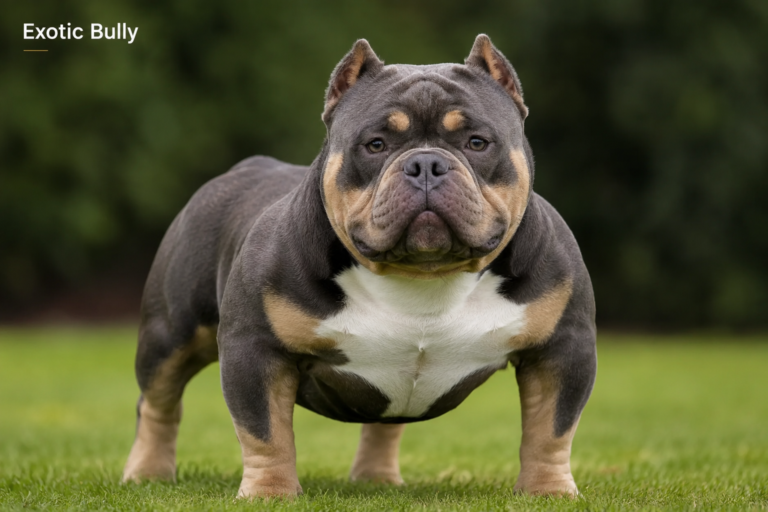
The Exotic Bully is one of the most talked-about companion dogs in the modern bully breed world. Known for its compact frame, exaggerated muscular build, broad chest, and distinctive facial features, this dog has gained significant popularity on social media and among enthusiasts seeking a unique-looking companion.
Despite its growing fan base, the breed remains controversial. Supporters praise its affectionate personality and striking appearance, while critics and many veterinary professionals raise concerns about health problems linked to selective breeding. Understanding both sides is essential before bringing one of these dogs into your home.
This guide explores the origins, physical characteristics, temperament, health issues, lifespan, care requirements, and ownership considerations associated with the Exotic Bully.
What Is an Exotic Bully?
The Exotic Bully is a companion dog developed from the American Bully bloodline. Unlike the officially recognized American Bully varieties—Standard, Classic, Pocket, and XL—the Exotic Bully is generally not recognized by major bully breed registries. It was developed through selective breeding to create an even smaller and more compact dog with exaggerated physical traits.
Many breeders incorporated bulldog-type breeds, including French Bulldogs and other compact bulldogs, to achieve the desired appearance. The result is a dog with a broad head, shortened muzzle, muscular body, and extremely compact structure.
While appearance remains the primary attraction, prospective owners should understand that these physical traits can also contribute to health challenges throughout the dog’s life.
History and Origins of the Exotic Bully
The American Bully Foundation
To understand the Exotic Bully, it helps to first understand the American Bully. The American Bully was developed in the United States during the 1980s and 1990s as a companion-focused breed. Breeders combined the American Pit Bull Terrier with several bulldog breeds to create a muscular dog with a more family-oriented temperament.
The goal was to maintain the powerful appearance of traditional bully breeds while emphasizing companionship and sociability.
Development of the Exotic Variety
The Exotic Bully emerged later when breeders sought an even more compact dog. By crossing Pocket Bullies with various bulldog breeds, they created a smaller dog featuring exaggerated characteristics such as shorter legs, wider chests, larger heads, and shorter muzzles.
These dogs quickly gained attention online due to their unusual appearance and rarity.
Recognition Status
Unlike recognized American Bully categories, the Exotic Bully is not accepted as an official variety by many major breed organizations. Breed standards vary significantly between breeders, resulting in substantial differences in appearance and structure from one dog to another.
This lack of standardization remains one of the reasons the breed continues to generate debate among dog enthusiasts.
Physical Characteristics
Size and Weight
Most Exotic Bullies are significantly smaller than standard American Bullies.
Typical measurements include:
- Height: Approximately 10–13 inches at the shoulder
- Weight: Around 25–50 pounds
- Build: Heavy, muscular, and compact despite their small stature
Their stocky frame often makes them appear much heavier than other dogs of similar height.
Head and Facial Structure
The head is one of the breed’s most recognizable features.
Characteristics commonly include:
- Broad skull
- Prominent cheek muscles
- Short muzzle
- Wide-set eyes
- Thick neck
- Pronounced jawline
These features create the distinctive “bully” look many enthusiasts admire.
Body Structure
An Exotic Bully typically has:
- Wide chest
- Heavy bone structure
- Muscular shoulders
- Compact torso
- Short legs
- Broad stance
The degree of exaggeration varies considerably among individual dogs.
Coat and Colors
The coat is usually short, smooth, and glossy.
Common colors include:
- Black
- Blue
- Chocolate
- Lilac
- Fawn
- Brindle
- Tri-color patterns
The short coat contributes to relatively simple grooming requirements compared with long-haired breeds.
Exotic Bully Temperament
Affectionate Nature
One reason for the breed’s popularity is its affectionate personality.
Many owners describe these dogs as:
- Loyal
- Loving
- Family-oriented
- Eager for attention
- Strongly bonded to their owners
They generally prefer spending time close to family members rather than being left alone for extended periods.
Relationship With Children
When properly socialized, many Exotic Bullies interact well with children.
Their affectionate nature often makes them patient companions. However, supervision is important with any dog, particularly because of the breed’s muscular build and strength.
Early socialization helps establish appropriate behavior around younger family members.
Interaction With Other Pets
Experiences vary depending on genetics, training, and socialization.
Dogs introduced early to other animals often adapt more successfully to multi-pet households. Consistent training and positive exposure are important factors influencing social behavior.
Energy Levels
The Exotic Bully generally displays moderate energy levels.
Most enjoy:
- Short walks
- Interactive games
- Basic training activities
- Family interaction
Unlike some athletic working breeds, they are not typically known for extreme endurance or high-intensity exercise.
Training and Socialization
Intelligence and Trainability
Many Exotic Bullies are eager to please and respond positively to reward-based training.
Successful training usually includes:
- Positive reinforcement
- Consistency
- Patience
- Early socialization
Harsh correction methods are generally less effective and can damage trust.
Importance of Early Socialization
Socialization should begin during puppyhood.
Exposure to:
- Different people
- Various environments
- Other dogs
- Household sounds
helps build confidence and reduces the likelihood of behavioral issues later in life.
Obedience Training
Basic commands such as sit, stay, come, and leave it provide valuable structure.
Because of the breed’s physical strength, obedience training is especially important for safe interactions in public settings.
Health Concerns and Controversies
Why Health Is a Major Discussion Point
Health remains the most controversial aspect of the Exotic Bully.
Numerous critics, veterinarians, and breed enthusiasts have expressed concern that extreme physical traits may contribute to lifelong health challenges. Many concerns stem from selective breeding practices focused heavily on appearance.
Understanding these risks is essential before considering ownership.
Breathing Problems
The shortened muzzle seen in many Exotic Bullies can contribute to breathing difficulties.
Potential issues include:
- Reduced airflow
- Heat intolerance
- Exercise limitations
- Respiratory distress in hot weather
Owners often need to carefully monitor activity during warmer temperatures.
Joint and Mobility Issues
The combination of heavy muscle mass and compact skeletal structure can place additional stress on joints.
Reported concerns include:
- Hip dysplasia
- Elbow problems
- Arthritis
- Mobility limitations
Maintaining a healthy weight is especially important for these dogs.
Skin Conditions
Skin problems can occur due to:
- Allergies
- Skin folds
- Environmental sensitivities
Routine grooming and veterinary care help minimize complications.
Heart and Structural Concerns
Some breeders and veterinary professionals have reported increased rates of structural and cardiovascular issues within certain bloodlines.
Responsible breeding practices and health testing are critical for improving long-term outcomes.
Lifespan of an Exotic Bully
Average Life Expectancy
Life expectancy estimates vary considerably depending on genetics, breeding quality, and overall health.
Many sources report a lifespan ranging between five and seven years, while some healthier individuals may live longer with excellent care.
The shorter lifespan compared with many other companion breeds remains a significant concern among veterinarians and animal welfare advocates.
Factors That Influence Longevity
Several factors affect lifespan:
- Genetic background
- Breeding practices
- Nutrition
- Weight management
- Veterinary care
- Exercise levels
- Respiratory health
Dogs from responsible breeders with health-tested parents generally have better long-term prospects.
Grooming and Daily Care
Coat Maintenance
The short coat requires minimal upkeep.
Weekly brushing typically helps:
- Remove loose hair
- Maintain coat shine
- Distribute natural oils
Most owners find grooming relatively easy.
Bathing Needs
Bathing every few weeks or when necessary is usually sufficient.
Using dog-specific shampoos helps prevent skin irritation and dryness.
Exercise Requirements
Although muscular, the breed generally benefits from moderate activity rather than intense athletic exercise.
Suitable activities include:
- Daily walks
- Play sessions
- Mental stimulation games
- Basic obedience training
Exercise should be adjusted according to the dog’s breathing ability and overall health.
Nutrition
A balanced, high-quality diet supports:
- Joint health
- Muscle maintenance
- Healthy weight
- Overall wellness
Because excess weight can worsen structural issues, portion control is particularly important.
Is an Exotic Bully Right for You?
Ideal Owners
The breed may suit individuals who:
- Want a highly affectionate companion
- Have time for daily interaction
- Understand potential health concerns
- Can afford regular veterinary care
- Appreciate the breed’s unique appearance
Responsible ownership requires both financial commitment and realistic expectations.
Situations Where Another Breed May Be Better
The Exotic Bully may not be ideal for people seeking:
- Athletic performance dogs
- Long-distance hiking companions
- Extremely low veterinary expenses
- Highly standardized breed characteristics
Potential owners should carefully evaluate the breed’s health challenges before making a decision.
Frequently Asked Questions
Q: What breeds make an Exotic Bully?
A: Most Exotic Bullies descend from the American Bully and are often crossed with compact bulldog breeds to achieve their distinctive appearance. Breeding programs vary significantly between kennels, which contributes to differences in size and structure.
Q: Are Exotic Bullies recognized by major kennel clubs?
A: Generally, no. The Exotic Bully is not widely recognized as an official American Bully variety by major organizations, and standards differ across registries and breeders.
Q: Do Exotic Bullies make good family pets?
A: Many owners report that they are affectionate, loyal, and people-oriented dogs. Proper training, supervision, and socialization remain essential for positive family interactions.
Q: Why is the Exotic Bully controversial?
A: The controversy largely centers on breeding practices and health concerns. Critics argue that extreme physical traits can contribute to breathing difficulties, mobility problems, and reduced quality of life.
Q: How long do Exotic Bullies live?
A: Lifespan estimates vary, but many sources place the average life expectancy between five and seven years, though some dogs may live longer with excellent genetics and care.
Conclusion
The Exotic Bully is a unique and eye-catching companion dog that has attracted considerable attention for its compact size, muscular build, and affectionate personality. While many owners appreciate the breed’s loyalty and family-friendly nature, potential health challenges cannot be ignored.
Anyone considering ownership should thoroughly research breeders, request health testing documentation, and consult with veterinary professionals before making a commitment. A well-cared-for dog can become a devoted companion, but responsible ownership begins with understanding both the appeal and the realities of this controversial breed.