
The term “the plimsoll” carries more than one meaning depending on context, but it is most famously linked to maritime safety and the famous Plimsoll line found on ships. It is named after British reformer Samuel Plimsoll, who played a key role in improving safety standards for sailors in the 19th century. Over time, the word also became associated with lightweight canvas shoes in British English due to a visual resemblance.
Today, when people refer to the plimsoll, they are usually referring either to the ship’s safety mark or the historical influence behind the term. This article explores both meanings in depth, tracing its origin, evolution, and cultural significance in modern language and design.
Who Was Samuel Plimsoll and Why His Name Matters
A reformer who changed maritime safety
Samuel Plimsoll was a British politician and social reformer in the 19th century who became deeply concerned about unsafe shipping practices. During his time, many cargo ships were overloaded for profit, often leading to disasters at sea and the loss of countless sailors’ lives. His advocacy focused on stopping this dangerous practice and enforcing stricter safety standards.
His efforts eventually led to legal reforms in Britain that required ships to be marked with a safe loading limit, ensuring they would not be dangerously overloaded. This contribution had a lasting global impact on maritime safety regulations and remains a foundation of modern shipping laws.
The human cost behind the reform
Before these reforms, merchant shipping was highly competitive and poorly regulated. Ship owners often prioritized profit over safety, pushing vessels beyond safe limits. These overloaded ships—sometimes called “coffin ships”—were prone to sinking in rough seas.
Plimsoll’s campaign brought public attention to these dangers. His persistence helped shift public opinion and government policy toward protecting sailors rather than just protecting commercial interests. His legacy is remembered as one of the earliest and most important examples of occupational safety reform.
From political struggle to global adoption
Despite strong opposition from parts of the shipping industry, Plimsoll’s ideas gained momentum. Over time, the safety marking he championed became internationally standardized. Today, ships across the world still use variations of the same system, showing how one reform movement reshaped global maritime practice.
What Is the Plimsoll Line on a Ship?

The basic meaning of the Plimsoll mark
The Plimsoll line, also known as a load line, is a set of markings on the side of a ship’s hull. It indicates the maximum depth to which a vessel can be safely loaded. If a ship sits too low in the water and the line is submerged beyond allowed limits, it is considered overloaded and unsafe.
This marking is essential for preventing ships from carrying more cargo than they can handle under specific conditions. It helps ensure stability, buoyancy, and safety during voyages across different climates and ocean conditions.
Why ships have multiple load lines
One of the most important aspects of the Plimsoll system is that it is not just a single line. Instead, ships carry multiple markings representing different water types and seasons.
These variations matter because water density changes depending on temperature and salinity. For example, a ship floats differently in cold seawater compared to warm freshwater. The Plimsoll system accounts for these differences to maintain safety across global routes.
A global safety standard in shipping
Over time, the Plimsoll marking system was adopted internationally, becoming a standard requirement for commercial ships. This global agreement ensures that vessels operating in different countries follow the same basic safety principles.
The system significantly reduced maritime disasters caused by overloading and remains a core part of modern naval engineering. It is one of the simplest yet most effective safety innovations in transportation history.
The Plimsoll in Everyday Language and Culture

How a ship safety mark inspired footwear names
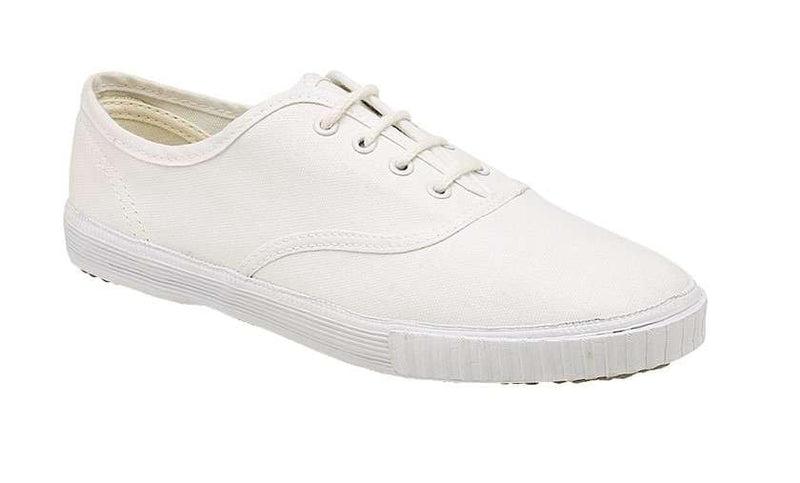
Interestingly, “the plimsoll” is also connected to footwear. In British English, plimsolls refer to lightweight canvas shoes with rubber soles, commonly used for sports or school physical education.
The name comes from the visual similarity between the shoe’s rubber sole line and the Plimsoll line on ships. Just as the line on a ship shows a safe limit, the shoe’s rubber edge resembles a boundary—above which water would enter and make the shoe uncomfortable or wet.
Plimsolls in British school culture
For many people in the UK, plimsolls are strongly associated with school gym classes. They were simple, inexpensive, and widely used for indoor physical education activities. Their basic design made them accessible, though they offered little cushioning or support compared to modern athletic footwear.
Over time, more advanced sports shoes replaced plimsolls in many schools, but the term remains culturally recognizable, especially in older generations or traditional contexts.
Regional variations and global usage
While “plimsoll” is mostly a British term, similar shoes exist worldwide under different names such as “sneakers,” “trainers,” or “gym shoes.” The connection between maritime history and footwear is unique to English language evolution, showing how technical terms can influence everyday vocabulary in unexpected ways.
Why the Plimsoll System Still Matters Today
A foundation of modern shipping safety
The Plimsoll system is still a critical part of international maritime regulations. Every large commercial ship must display load lines that comply with international safety agreements. These markings ensure that vessels are not dangerously overloaded, regardless of commercial pressure or route demands.
Without such standards, global trade would be far riskier and less reliable. The system helps maintain balance between efficiency and safety in one of the world’s most important industries.
Lessons in engineering and responsibility
The story behind the Plimsoll line is also a lesson in responsibility. It shows how engineering solutions can directly address human safety concerns. Instead of relying on judgment alone, the system provides a visible, enforceable safety boundary.
This principle—turning safety rules into physical, visible indicators—is used in many modern industries, from aviation to construction. It reflects a broader philosophy of designing systems that protect people by default.
A legacy that continues to influence design thinking
Beyond shipping, the idea behind “the plimsoll” has influenced how designers think about limits and safety margins. Whether in engineering, architecture, or product design, the concept of marking safe thresholds remains a powerful tool for preventing risk.
Samuel Plimsoll’s legacy continues not just in maritime law, but in the way modern systems are designed to protect human life through clear boundaries.
FAQ About the Plimsoll
Q: What does the Plimsoll line on a ship mean?
The Plimsoll line is a marking on a ship’s hull that shows the maximum safe loading level. It ensures the vessel is not overloaded and remains stable in different water conditions. If the waterline goes above the mark, the ship is considered unsafe to sail under those conditions.
Q: Who invented the Plimsoll line?
The Plimsoll line was introduced through the efforts of Samuel Plimsoll, a British politician and reformer in the 19th century. He campaigned for safer shipping practices and helped push laws that required ships to display load lines for safety.
Q: Why are shoes called plimsolls?
The name comes from the similarity between the shoe’s rubber sole line and the Plimsoll line on ships. The term became popular in the UK for lightweight canvas sports shoes commonly used in schools and sports activities.
Q: Is the Plimsoll line still used today?
Yes, modern ships still use load line markings based on the Plimsoll system. These markings are regulated internationally and remain a key part of maritime safety standards.
Conclusion
The term “the plimsoll” connects two seemingly different worlds—maritime safety and everyday footwear—but both share a common origin in visual symbolism and practical design. At its core, it represents the idea of safe limits, whether for a massive cargo ship or a simple canvas shoe.
Samuel Plimsoll’s legacy lives on through international shipping laws that continue to protect lives at sea. Meanwhile, the word itself has quietly entered everyday language through footwear culture. Understanding the plimsoll means understanding how a single idea can shape safety, language, and design across generations.

[…] rise of bronde hair is closely linked to the shift toward low-maintenance beauty. People want color that grows out […]